Behind the three technologies
A history of real-time simulation in broadcast
Bug Muldoon did not arrive in a vacuum. The people who made him have been building real-time character simulation for television since before the term existed — first as European research, then as broadcast product, then as a permanent virtual studio installed inside a Hamburg theatre.
1975 — 1981
Ampex Video Art
At the New York Institute of Technology in the late 1970s, pioneering digital paint software was written by Dr Alvy Ray Smith, later co-founder of Pixar[4]. Ampex acquired it and built it into a commercial hardware system, AVA — Ampex Video Art, created in 1979–1980 by a team including Junaid Sheikh[4], who would later found Abekas[7]. Richard Kunicki, head of VAP in Hamburg, brought the AVA system to the European broadcast market — the first generation of electronic image production tools.
1992 — 1995
MONA LISA — European research project R2052
Modelling Natural Images for Synthesis and Animation — an EU RACE II project funded by the European Community. VAP was one of eight participants, alongside the BBC, Daimler-Benz, DVS, Siemens and three universities, coordinated by Thomson Broadband Systems[1]. The European Commission's own project record names the ELSET System as the project's demonstrator; VAP conceived and built it, under Richard Kunicki. Results were published by Springer as Image Processing for Broadcast and Video Production — the proceedings of the workshop held in Hamburg, 23–24 November 1994. ISBN 3-540-19947-0.[2][3]
In parallel with the research, VAP commissions a group of Polish programmers to write the ELSET software for scenography simulation in television production[5].
1994 — 1998
ELSET and the VAP Medienzentrum
Richard Kunicki invents ELSET — Electronic Set — the virtual studio system that still renders in Hamburg today. In the same period he builds and runs the VAP Medienzentrum, a 10,000 m² television studio complex.
1995 — 2000
ELSET is sold, and goes worldwide
ELSET is shown at the NAB Convention in Las Vegas in 1996, the largest broadcast technology exhibition in the world — the first public presentation anywhere of a virtual character performing against virtual scenery, realised at the invitation of Silicon Graphics[5].
The success of that presentation carries ELSET to market. At the end of 1996 ELSET GmbH, a wholly owned sister company of VAP, sells the rights to the ELSET software, source code included, to Accom, Inc. of Menlo Park, California, for eight million US dollars[5].
Three ELSET licences were excluded from that sale and stayed with VAP, along with the right to go on developing virtual scene databases and libraries[5]. The eight million dollars was the price of the software and its source code, not of the company's ability to keep using it — which is why an ELSET studio was still running in Hamburg years afterwards.
ELSET licences are bought by the BBC, CBS, NBC and Telewizja Polska. In March 2000 the source code passes again, to Orad[5]. The engineering team continues in Szczecin as Accom Poland under Andrew Wojdala, chief engineer of the Virtual Sets division and project leader for ELSET, who publishes on the system in IEEE MultiMedia in 1998[6].
1995 — 2000
COMPET — a character performed live to buyers
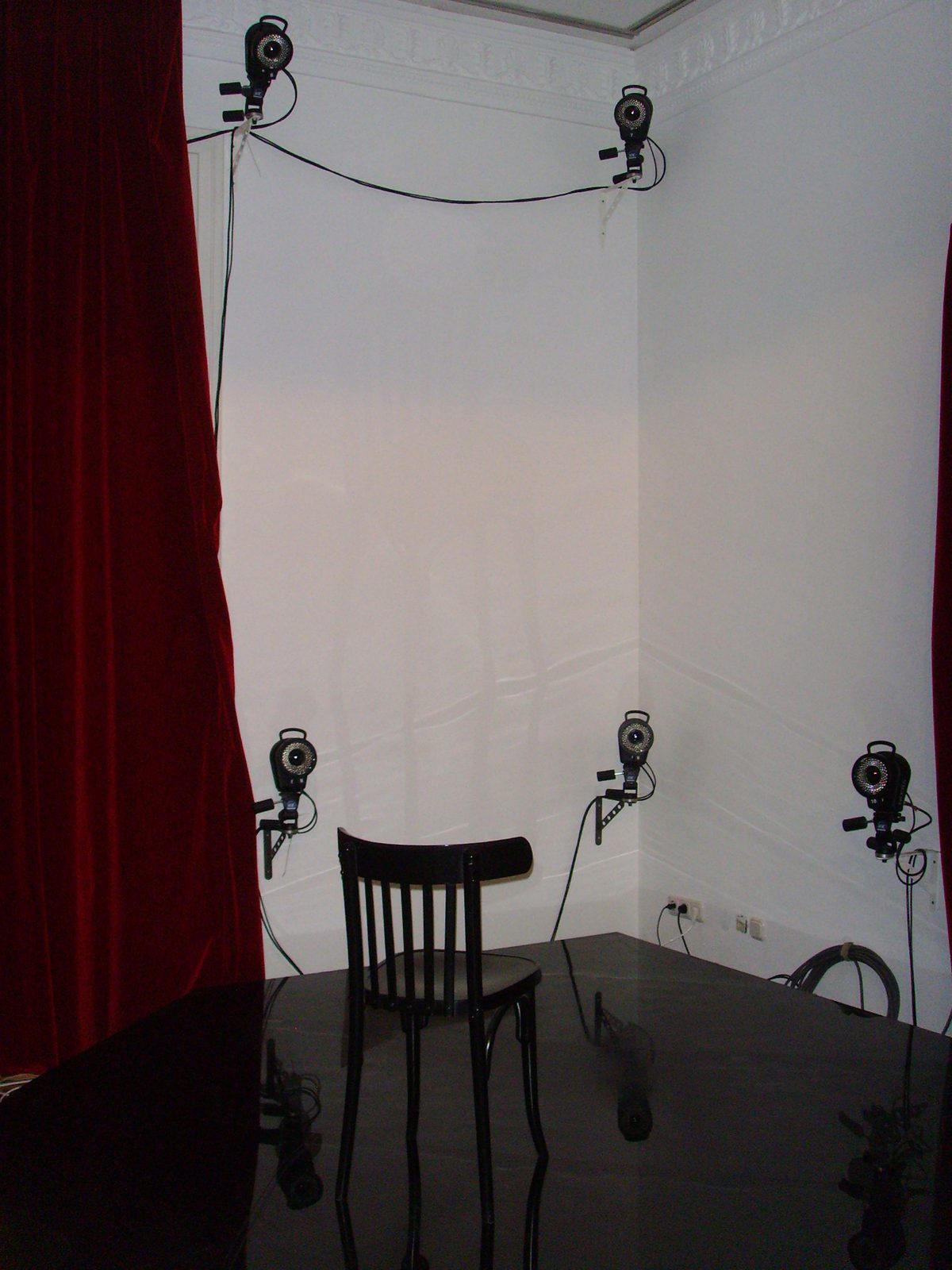
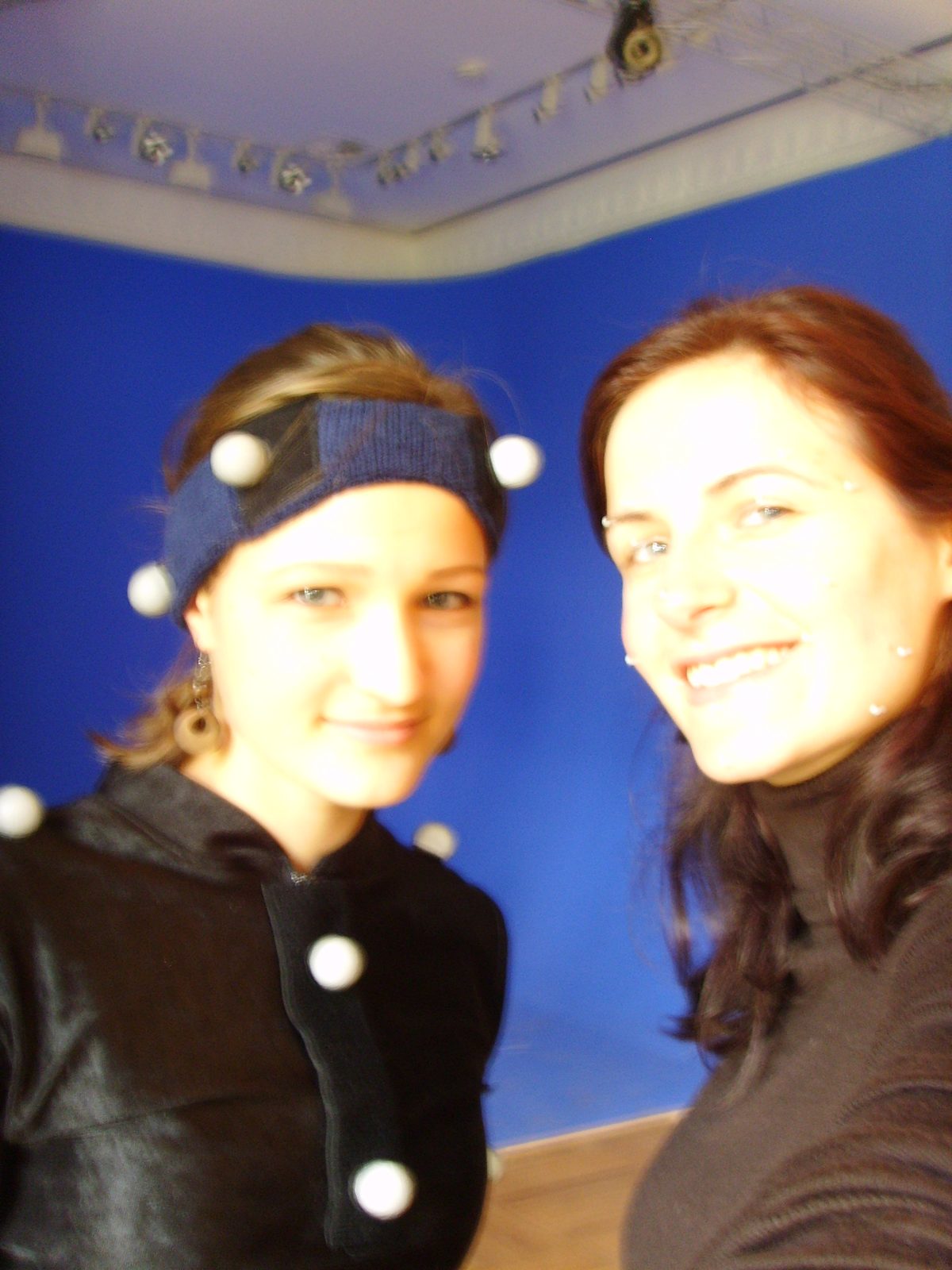
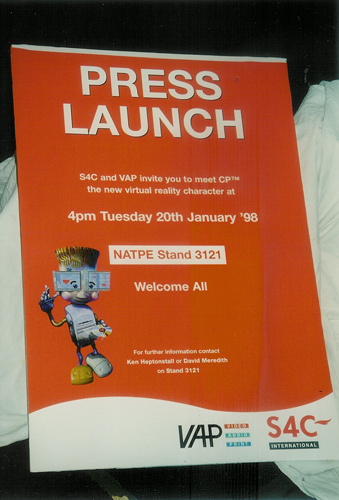
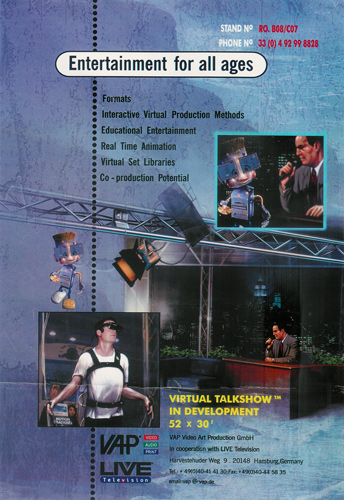
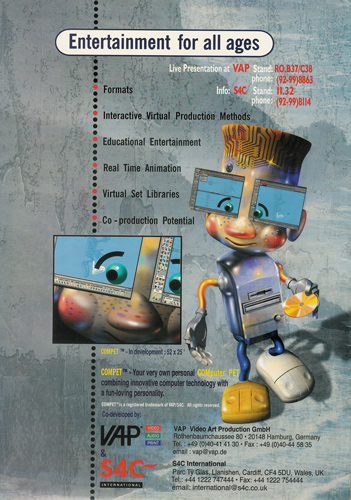
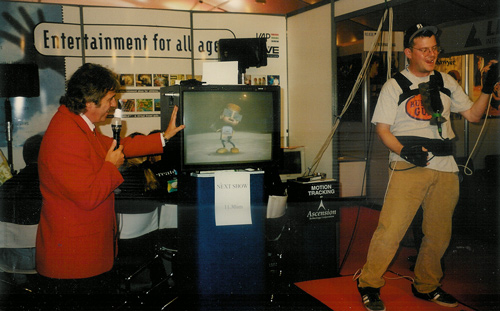
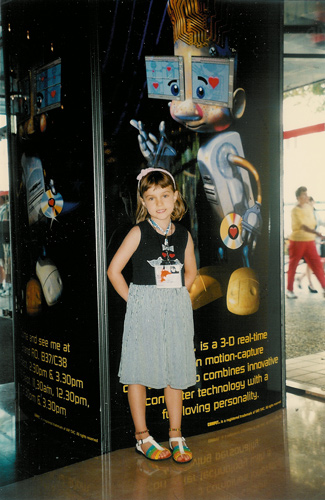
A computer pet with a monitor for a face, driven by a performer in real time. A magnetic field read the body; a studio camera was mechanically synchronised to its virtual twin so the character could share a frame with a human presenter. Presented by LTV Live Television and VAP at the largest television markets of the period: MIPCOM 1997 in Cannes, where a live actor appeared with the virtual character COMPET C.P. in cooperation with S4C; MIPTV 1997, with the shadow puppets of Shadow Club; MIPTV 1998, with a virtual balloon-flight quiz later sold to CENTER TV in Moscow; and NATPE 1998 in New Orleans, a live multi-camera production placing a real actor against virtual and real backgrounds in interaction with COMPET C.P., again with S4C[5].
1996
Media Forum '96, Warsaw
At the invitation of Telewizja Polska Programme 1, VAP demonstrates ELSET at Media Forum in the Palace of Culture and Science in Warsaw[5] — the system's first public showing in Poland, in the country where its code was written.[5].
2001 — 2005
Theater im Zimmer
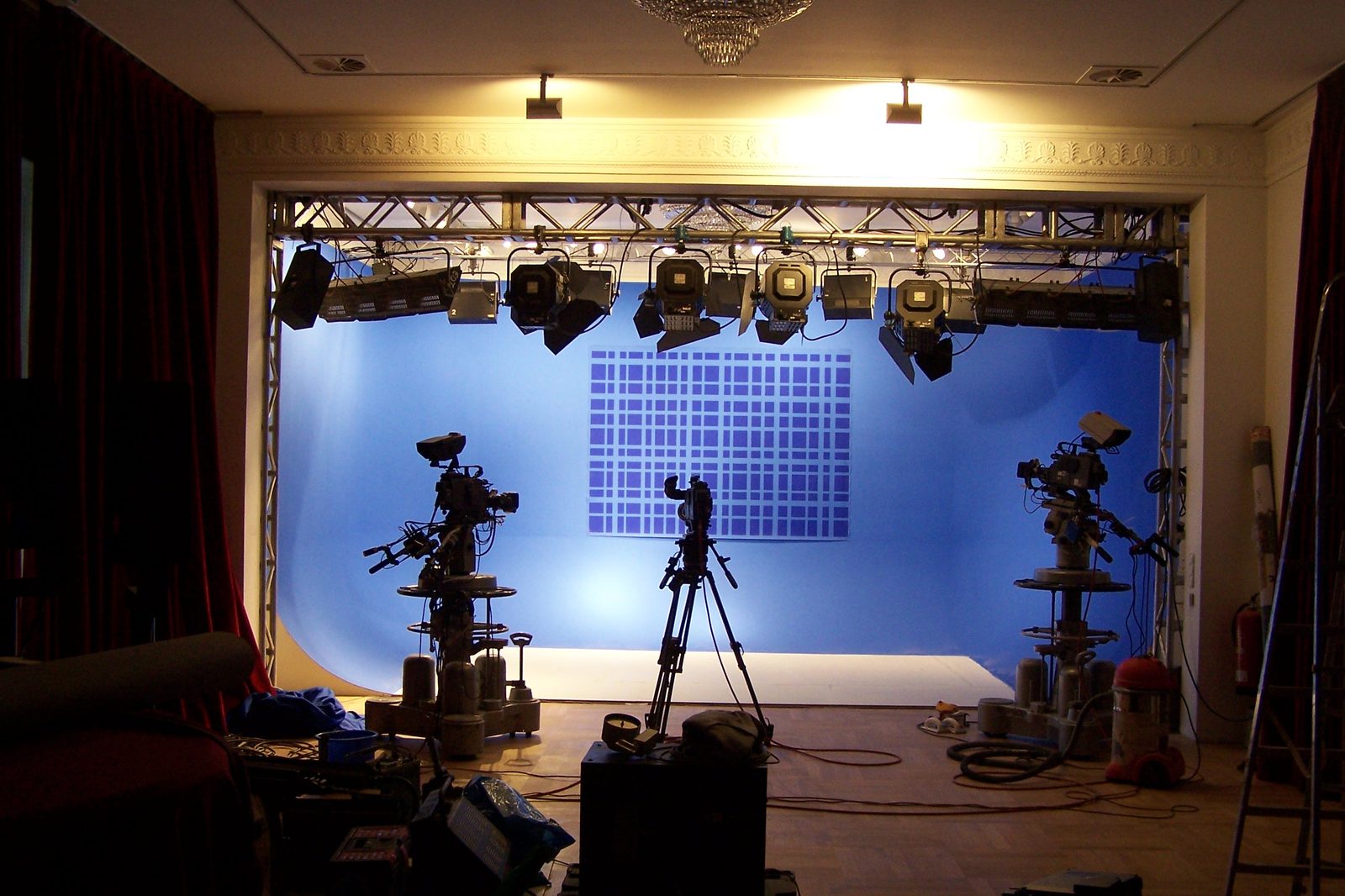
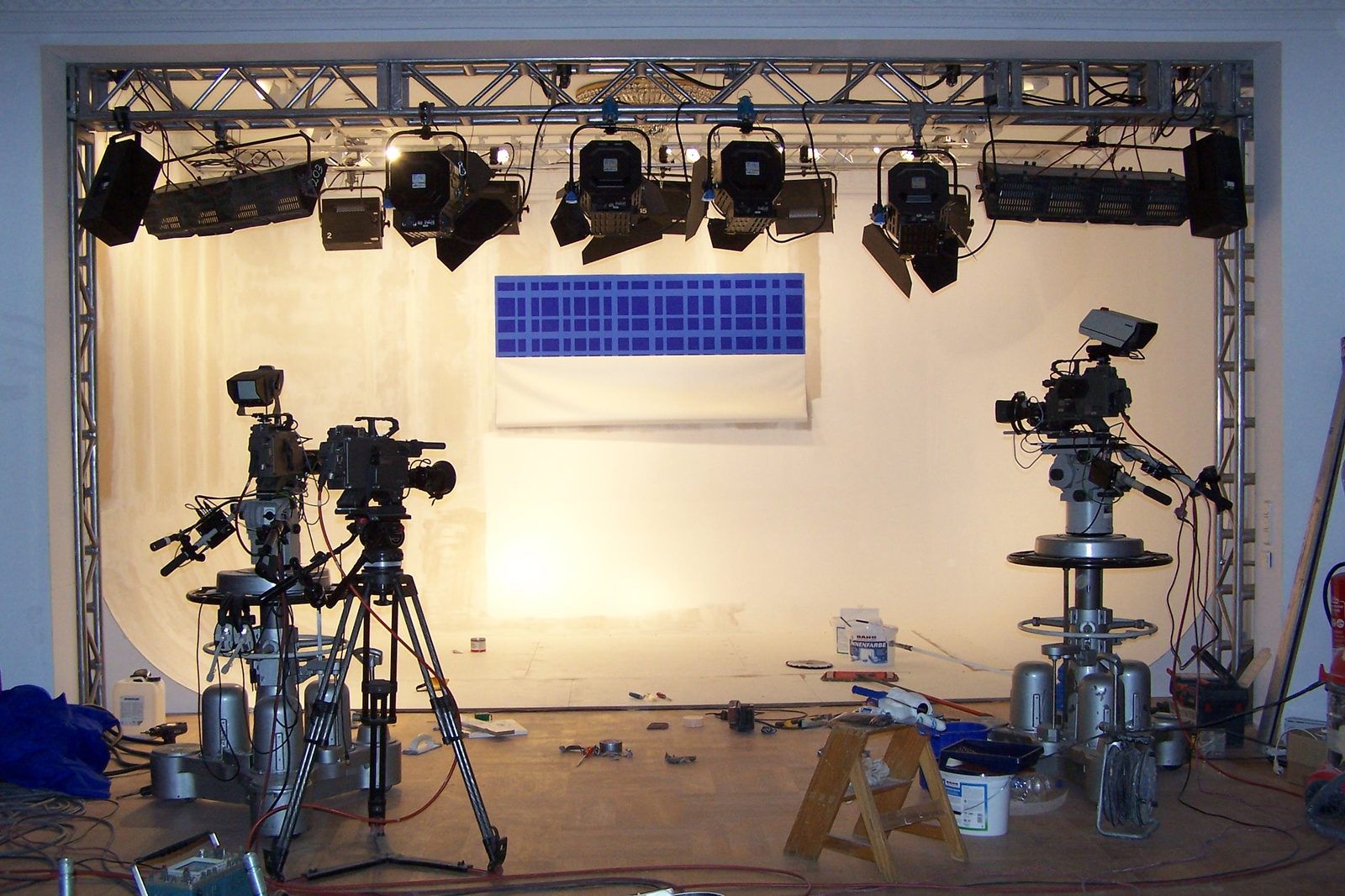
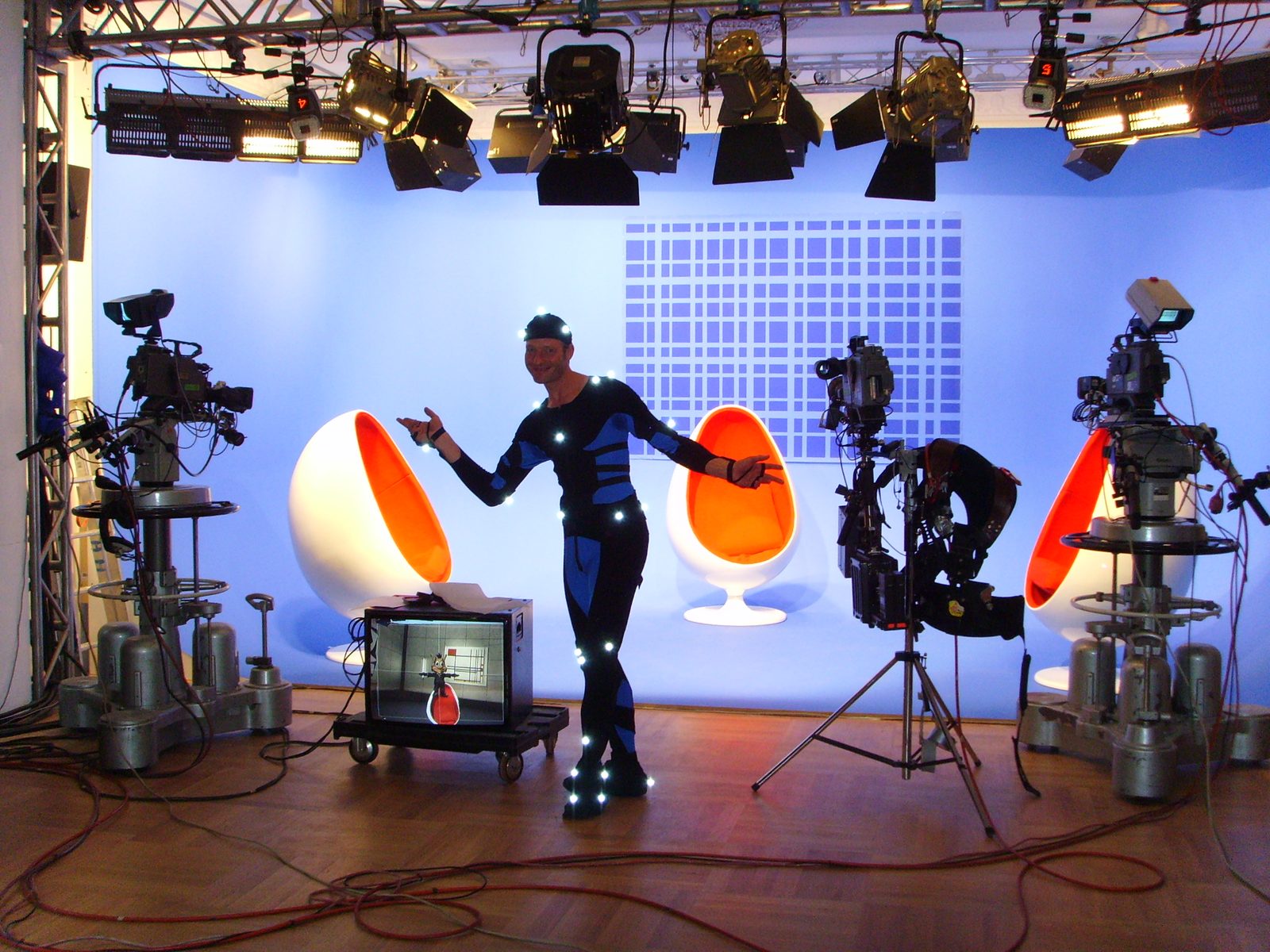
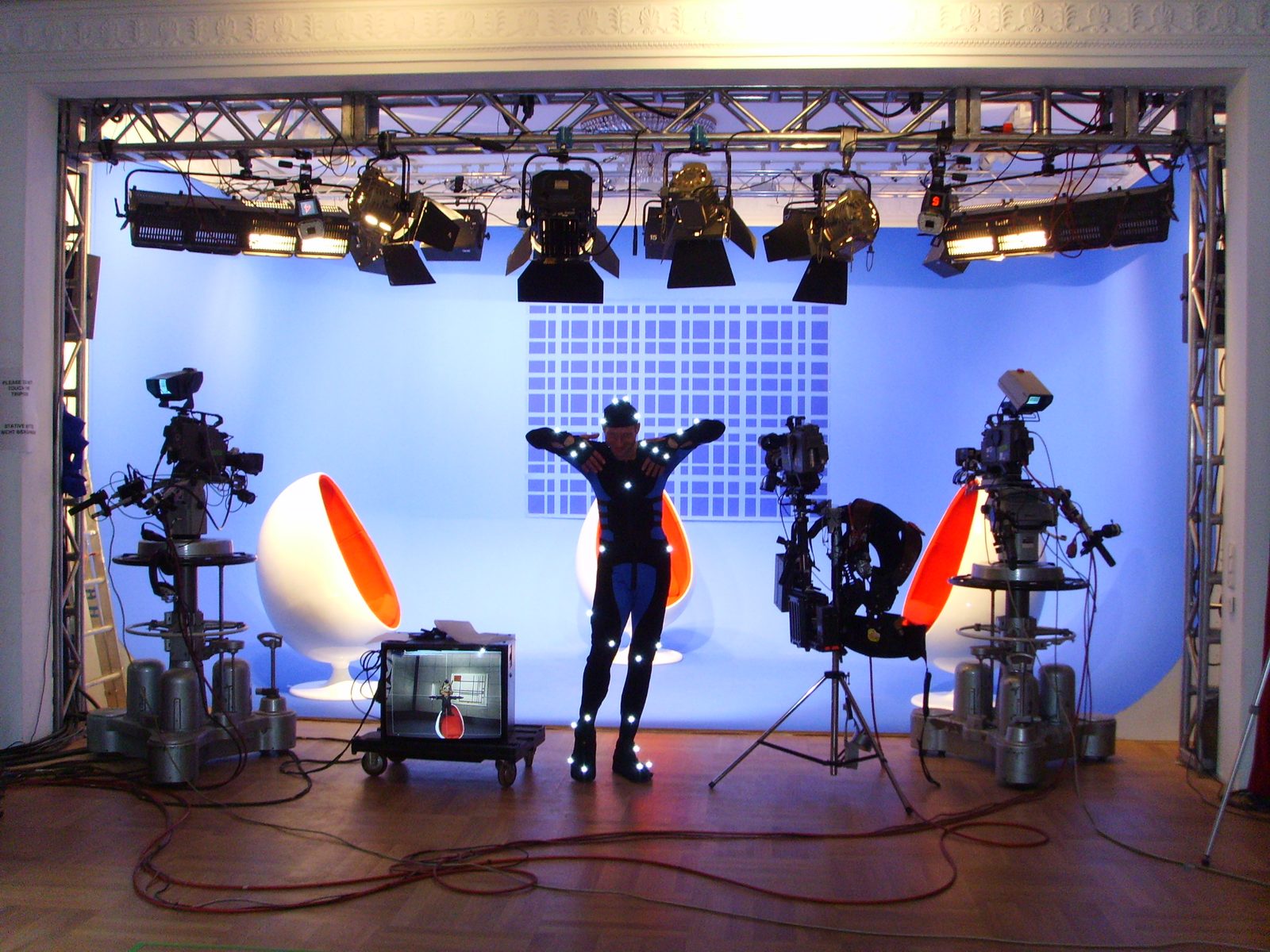
A Hamburg theatre comes under the same management, and from 2004 an ELSET virtual studio is built into its stage — lighting truss beneath a stucco cornice, tracked cameras in front of a cyclorama. It is the room where Bug Muldoon would later be performed live.

 2007 · Keyframe
2026 · Generative AI
2007 · Keyframe
2026 · Generative AI